 Rush Delivery: As soon as September 10


Key Takeaways:
- DTF (Direct-to-Film) printing transfers designs from a special film onto T-shirts using adhesive powder and heat, producing vibrant, full-color results with excellent detail.
- Unlike screen printing, DTF has no minimum order requirements, making it ideal for single shirts, small batches, custom events, and print-on-demand businesses.
- DTF works on cotton, polyester, blends, and many other fabrics, while maintaining strong color vibrancy on both light and dark shirts.
- The process supports complex artwork, gradients, fine text, and photographic designs without the setup costs associated with traditional printing methods.
- When properly applied and cared for, DTF prints are durable, flexible, and resistant to cracking or peeling, often lasting through dozens of wash cycles.
- DTF is an excellent choice for custom T-shirts, apparel brands, promotional merchandise, and businesses that need fast turnaround times with professional-quality results.
If you’re trying to understand DTF printing and whether it’s the right choice for your custom apparel, you’re not alone; many businesses and individuals struggle to choose between DTF, screen printing, and embroidery.
The problem is that picking the wrong method can lead to higher costs, poor durability, or designs that don’t look as expected.
In real-world production, we often see issues such as faded prints, cracked designs, or oversized minimum order requirements that cause delays and waste.
In this guide, you’ll learn exactly what DTF printing is, how it works, and when it’s the best option for your project.
What Is DTF (Direct-to-Film) Printing?
DTF (Direct-to-Film) printing is a modern apparel decoration method where a design is digitally printed onto a special transfer film, coated with adhesive powder, and then heat-pressed onto a garment. It produces vibrant, full-color prints on a wide range of fabrics and is ideal for custom apparel orders of any size, including one-off items.
Why Is DTF Printing Popular for Small Orders?
DTF printing removes many of the limitations associated with traditional garment decoration methods, making it a practical and cost-effective choice for businesses, brands, and individuals.
- No Minimum Order Requirements: DTF lets you print a single item or a small batch without additional setup costs, making it ideal for custom orders, events, and print-on-demand businesses.
- Works on Multiple Fabric Types: DTF adheres effectively to cotton, polyester, fabric blends, denim, and other materials, providing greater flexibility across different garment styles.
- Suitable for Light and Dark Garments: Prints remain vibrant and opaque on all fabric colors, ensuring consistent design quality.
- Supports Detailed, Full-Color Artwork: DTF accurately reproduces intricate designs, gradients, fine text, and photographic images without color limitations.
- Efficient Production Process: Designs are transferred directly to the garment, simplifying production and reducing preparation time.
- Durable and Long-Lasting: DTF prints are flexible, resistant to cracking and peeling, and maintain their appearance through repeated washing when properly cared for.
Summary
DTF printing is an excellent solution for custom apparel projects that require high-quality, full-color designs, fabric versatility, durability, and the flexibility to order as few or as many pieces as needed.How Does DTF Printing Work?
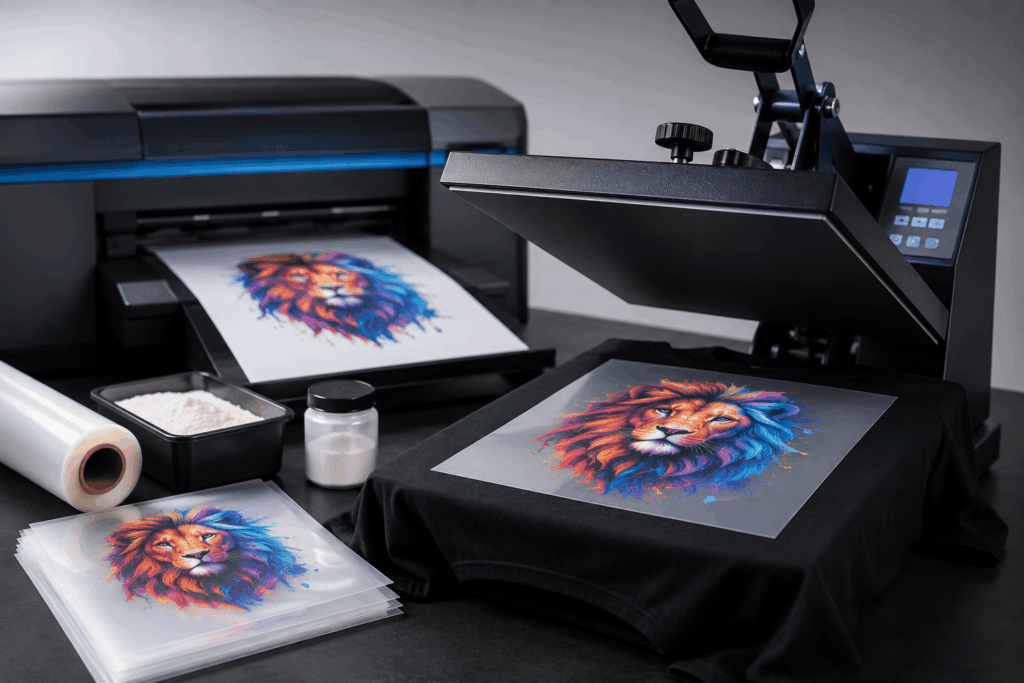
DTF (Direct-to-Film) printing is a process where a digital design is printed onto a specialized transfer film, coated with adhesive powder, cured with heat, and then transferred onto a garment using a heat press. This method produces durable, full-color prints on a wide range of fabrics, including cotton, polyester, blends, and more.
The DTF Printing Process
1. Design Printing
The artwork is digitally printed in reverse onto a special PET transfer film. A layer of white ink is applied behind the colors to ensure vibrant, opaque results on both light and dark garments.
2. Adhesive Powder Application
While the ink remains wet, a hot-melt adhesive powder is applied to the printed design. Any excess powder is removed, leaving adhesive only where the design has been printed.
3. Curing
The printed film is heated to melt the adhesive powder and cure the ink. This creates a ready-to-use transfer for application to garments.
4. Heat Transfer
The cured transfer is positioned on the garment and pressed using a heat press at a controlled temperature and pressure. This permanently bonds the design to the fabric.
5. Film Removal and Finishing
Once the transfer is complete, the carrier film is peeled away, leaving a vibrant, durable design securely attached to the garment.
Short Summary
DTF printing combines digital precision with heat-transfer technology to create high-quality,
full-color designs that are durable, flexible, and suitable for both small and large custom
apparel orders.
Who Should Use DTF Printing?
DTF (Direct-to-Film) printing is best suited for businesses and creators who need high-quality, full-color designs, flexible order quantities, and compatibility with multiple fabric types. It is particularly effective for short-run production, custom apparel, and on-demand fulfillment.
1. Small Businesses and Apparel Brands
DTF allows businesses to produce custom garments without large order commitments, making it a practical option for startups, growing brands, and personalized merchandise.
2. Print-on-Demand Sellers
Because designs can be produced as needed, DTF is ideal for e-commerce stores and custom apparel businesses looking to reduce inventory costs and offer greater product variety.
3. Custom Merchandise and Promotional Products
DTF works well on a wide range of materials, making it suitable for t-shirts, hoodies, bags, hats, and other branded products that require detailed, full-color graphics.
4. Businesses Requiring Complex Designs
DTF accurately reproduces intricate artwork, gradients, small text, and photographic images, making it a strong choice for detailed branding and creative designs.
When DTF May Not Be the Best Choice
1. High-Volume Production
For very large apparel orders with simple designs, other decoration methods may offer lower per-unit costs and faster production speeds.
2. Businesses Without Production Space
Operating an in-house DTF setup requires specialized equipment, regular maintenance, and a suitable production environment.
3. Budget-Conscious Operations
Purchasing printers, curing equipment, and production software involves a significant upfront investment, which may not be practical for every business.
DTF printing is an excellent solution for custom apparel brands, print-on-demand businesses,
and creators who need detailed, full-color designs with flexible order quantities. Its
versatility, quality, and ability to support small production runs make it one of the most
practical apparel decoration methods available today.
What Apparel Can Be Printed with DTF?
One of the biggest advantages of DTF printing is its compatibility with a wide variety of apparel. Whether you’re ordering a single custom shirt or outfitting an entire team, DTF works on many of the industry’s most popular garment brands.
1. Bella + Canvas
Known for its premium softness and retail-quality feel, Bella + Canvas apparel is a popular choice for fashion brands, events, and custom merchandise. DTF printing produces vibrant, detailed designs that complement the smooth fabric surface.
2. Carhartt
For businesses that need rugged workwear, Carhartt offers exceptional durability and long-lasting performance. DTF printing works well on many Carhartt garments, making it ideal for company uniforms and branded work apparel.
3. Nike & Adidas
Performance-focused apparel from Nike & Adidas combines comfort, style, and athletic functionality. DTF printing allows businesses, teams, and organizations to add custom branding to select performance garments.
4. Port & Company
Port & Company is a trusted choice for affordable custom apparel. It delivers excellent value for schools, nonprofits, events, and promotional campaigns while maintaining reliable print quality.
Why Garment Quality Matters
Even the best print technology can only perform as well as the garment it’s applied to. Choosing high-quality apparel improves comfort, appearance, durability, and overall customer satisfaction. When paired with DTF printing, premium garments help ensure professional-looking results that last wash after wash.
DTF vs Screen Printing vs DTG — Which Should You Choose?
| Feature | DTF | Screen Printing | DTG |
|---|---|---|---|
| Minimum Order | 1 piece | 24+ pieces | 1 piece |
| Best For | Any quantity, full-color designs | Bulk orders with simple artwork | Cotton garments and small runs |
| Setup Fees | None | Yes, per color | None |
| Fabric Compatibility | Most fabrics | Cotton and blends | Cotton only |
| Durability | 40–60+ washes | 50–80 washes | 30–50 washes |
1. When DTF Is the Best Choice
DTF printing is ideal when you need small quantities, quick turnaround times, or detailed full-color artwork. It works on cotton, polyester, blends, and many specialty fabrics, making it one of the most versatile decoration methods available. If your design includes gradients, multiple colors, or photographic elements, DTF delivers excellent results without minimum order requirements.
2. When Screen Printing Is the Best Choice
Screen printing is most cost-effective for orders of 24 pieces or more. It performs best with simple one- to four-color designs and offers exceptional durability for large production runs.
3. When DTG Is the Best Choice
DTG is best suited for cotton garments requiring highly detailed artwork and a soft print feel. It works well for small orders but has more limited fabric compatibility than DTF.
Does DTF Printing Last?
Yes, DTF (Direct-to-Film) printing is long-lasting and highly durable. When properly applied and cured, it can typically withstand 50 to 100 washes without major fading, cracking, or peeling.
What Happens After 50 Washes?
After around 50 washes, the print usually still looks good, but small natural changes may appear:
- Slight fading of colors while overall vibrancy remains
- Very fine micro-cracks due to repeated fabric stretching
- Minor edge wear on detailed or thin design areas
What Affects How Long It Lasts?
- Application quality: Proper heat, pressure, and curing improve adhesion and durability
- Material quality: High-quality ink, film, and adhesive increase wash resistance
- Fabric type: Smooth, tightly woven fabrics hold prints better than stretchy or textured ones
- Care routine: Gentle washing and low-heat drying significantly extend print life
Quick Summary
DTF printing is designed for long-term use. With proper production and care, it remains strong, flexible, and visually stable even after many washes.
Conclusion
DTF printing is a modern, flexible, and cost-effective way to create high-quality custom apparel with no minimum orders, no setup fees, and the freedom to print any design on almost any fabric. Whether you need a single piece or a full production run, it delivers consistent, vibrant, and durable results every time. With fast turnaround times as quick as 1–3 days, you don’t have to wait long to bring your ideas to life.
Ready to order? Upload your design and get a custom quote from The Apparel Pro, St. Louis’s trusted DTF printing shop with no minimums, no surprises, and professional-quality results every time.
Frequently Asked Questions
Can I really order just one custom T-shirt with DTF?
Yes, most DTF printing services allow single-piece orders. Unlike traditional screen printing, there’s no setup cost for multiple units, so even one custom shirt is practical and affordable.
What file types does DTF printing accept?
DTF printing typically works best with high-quality image files such as PNG (with a transparent background), PDF, AI, or PSD. PNG is the most widely accepted format for clean, sharp prints.
How fast can I get a custom shirt with no minimum?
Turnaround is usually very quick—often within 24 to 72 hours depending on the provider. Since there’s no bulk production setup, single orders can be processed much faster.
Does DTF printing work on dark-colored shirts?
Yes, DTF printing works very well on both light and dark fabrics. It uses a white ink base layer that makes colors pop clearly even on black or deep-colored garments.
Is DTF printing available on hoodies, hats, and other apparel?
Yes, DTF is highly versatile and can be applied to hoodies, caps, tote bags, and many other fabric-based items, as long as the material can handle heat pressing.