 Rush Delivery: As soon as April 11


Summary
- Polyester and polyester blends are the most common fabrics for gym shirts because they wick sweat, dry quickly, and stay lightweight during intense workouts.
- Moisture-wicking fabrics help pull sweat away from the skin so it can evaporate faster, keeping the body cooler and more comfortable during exercise.
- Nylon is another strong option for workout shirts because it provides excellent breathability, durability, and moisture transport.
- Cotton may feel soft, but it absorbs sweat, which can make gym shirts heavy, wet, and uncomfortable during high-intensity training.
- The best gym shirt fabric depends on the workout type, with breathable synthetic materials working best for intense exercise and blends providing added stretch and flexibility.
You start your workout feeling fresh. Ten minutes later, your shirt is soaked. By the end of the session, it feels like you’re wearing a wet towel. This happens because of the fabric.
Most people choose gym shirts based on style. But the material decides whether you stay cool or feel uncomfortable halfway through your workout.
Performance fabrics are built to move sweat away from your skin, dry quickly, and allow airflow even during intense sessions.
In this guide, you will learn the best fabrics for gym shirts, why certain materials outperform others, and how to choose the right one for your workouts.
What Is the Best Fabric for Gym Shirts?
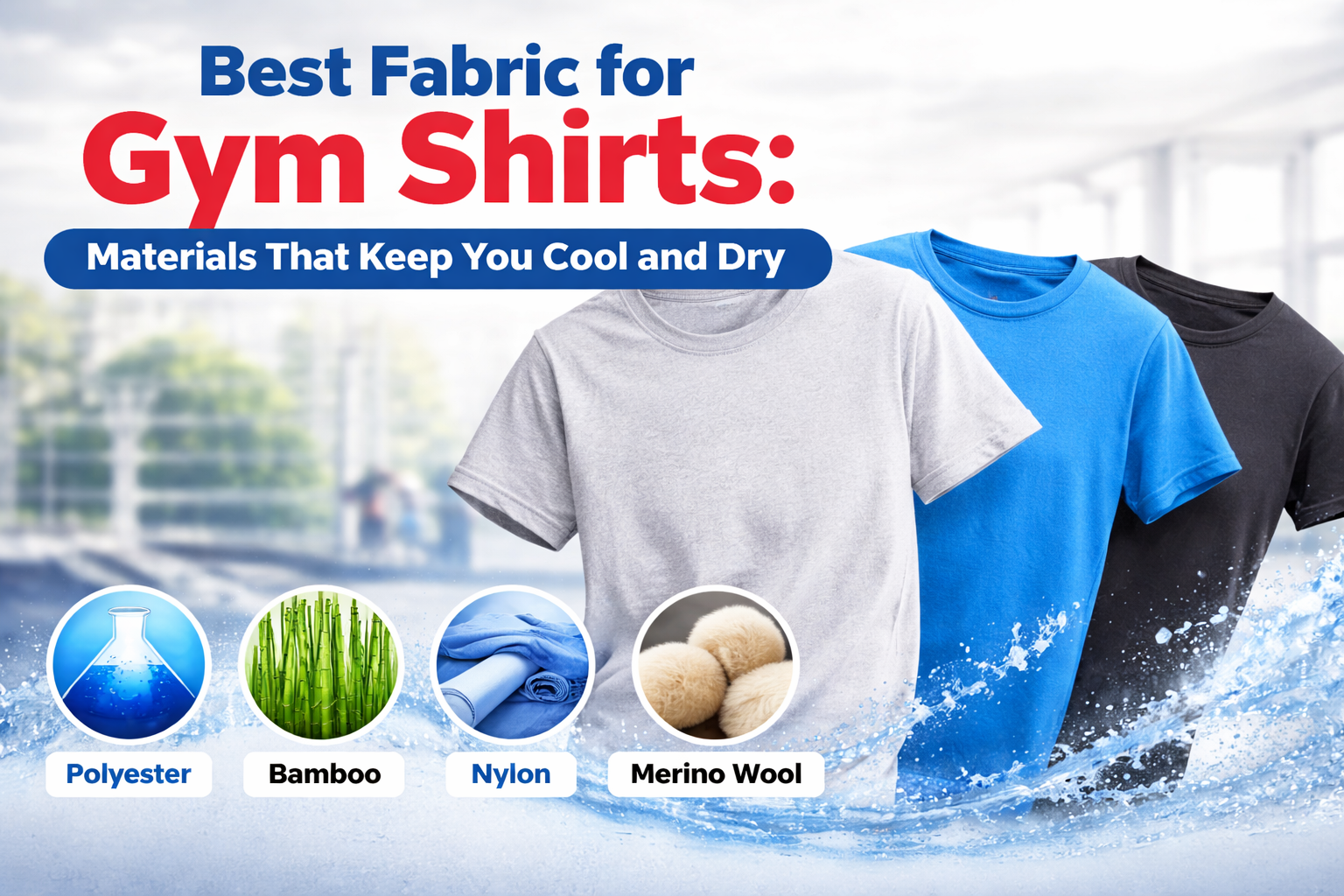
The best fabric for gym shirts is typically a performance synthetic, most commonly polyester, nylon, or a spandex blend.
Here is a quick overview of top-performing gym shirt materials:
| Fabric | Sweat Wicking | Breathability | Best For |
|---|---|---|---|
| Polyester | Excellent | Good | Intense workouts, general training |
| Nylon | Excellent | Very Good | Compression wear, running |
| Polyester + Spandex | Excellent | Good | HIIT, yoga, flexibility training |
| Bamboo | Moderate | Very Good | Light workouts, warm climates |
| Cotton | Poor | Good | Casual wear, light activity |
| Merino Wool | Good | Very Good | Outdoor workouts, temperature swings |
These fabrics dominate the best material for workout shirts category because they share four key performance traits:
- Moisture wicking — pulling sweat away from the skin
- Quick drying — allowing evaporation to happen faster
- Lightweight feel — reducing weight and bulk during movement
- Breathability — allowing airflow to regulate body temperature
Many major sportswear brands build their training apparel around moisture-management fabrics. For example,
Nike’s Dri-FIT technology and Under Armour’s HeatGear fabrics are engineered to pull sweat away from the skin and accelerate evaporation during workouts.
Why Most Gym Shirts Are Made From Polyester
Walk into any sportswear store, and the majority of gym shirts will be made from polyester. It has become the standard gym fabric material for several reasons.
Polyester is a synthetic fiber made from petroleum-based polymers. Its structure is hydrophobic, meaning it naturally repels water rather than absorbing it. When you sweat, moisture cannot soak into the fiber. Instead, it gets pushed to the outer surface of the fabric where it evaporates.
This is why polyester gym shirts do not get heavy and clingy the way cotton does. The sweat moves through the fabric and off your body.
Beyond moisture management, polyester offers:
- Durability — it holds its shape and color after hundreds of washes
- Lightweight structure — less fabric weight means more freedom of movement
- Low cost at scale — affordable to manufacture without sacrificing performance
- Versatility — works for running, lifting, team sports, and casual training
Is polyester good for workout clothes? The answer is yes for most training scenarios. It is especially effective during intense workouts where sweat output is high. The one drawback is that polyester can trap odor if not treated with antimicrobial finishes, but most quality gym shirts address this through fabric treatment.
Polyester vs Cotton Gym Shirts: Which Is Better?
This is one of the most searched questions in activewear, and the answer depends on what you are doing.
Cotton is a natural fiber that feels soft and familiar. Many people own cotton gym shirts without realizing how much the material works against them during hard training.
Cotton absorbs sweat rather than wicking it. The more you sweat, the heavier and wetter the shirt becomes. By the end of a hard session, a soaked cotton shirt can add noticeable weight and cause skin friction or chafing.
Polyester does the opposite. It resists moisture absorption, moves sweat to the surface, and dries quickly. A polyester gym shirt after the same workout will feel significantly lighter and drier.
Is cotton good for working out?
For light activity like a walk or a gentle yoga session, cotton is fine. But for intense training—running, HIIT, heavy lifting, or team sports—polyester and performance blends outperform cotton in almost every way. Athletes and serious gym-goers avoid cotton shirts specifically because that sweat absorption makes workouts less comfortable.
Sweat-Wicking Fabrics: What Keeps You Dry During Workouts?
Sweat-wicking fabric is any material engineered to move moisture away from the skin and allow it to evaporate quickly.
Performance sportswear fabrics are often evaluated using standardized textile tests such as the AATCC 195 Liquid Moisture Management Test, which measures how efficiently a fabric absorbs, transports, and spreads liquid moisture across its surface. The method produces objective measurements of how textiles manage sweat in real conditions.
Here is how moisture transport technology works in practice:
- Tiny synthetic fibers create channels that pull moisture away from the skin
- The sweat spreads across a larger surface area on the outer layer of the fabric
- That wider surface area allows faster evaporation into the air
- Your skin stays drier, which helps your body regulate temperature more effectively
What fabrics wick sweat best? The top performers are:
- Polyester — the most widely used sweat-wicking fabric in gym clothing
- Nylon — excellent moisture transport with a softer feel
- Polyester-spandex blends — wicking plus stretch for active movement
Why Fabric Blends Work Best for Workout Shirts
The best fabric for gym shirts is rarely a single material. Most high-performance workout shirts are blends: combinations of two or three fibers, engineered to cover each other’s weaknesses.
Why are fabric blends used in sportswear? Because no single fiber does everything well.
- Polyester wicks moisture but has limited stretch.
- Spandex stretches but cannot stand alone as a gym fabric.
- Nylon is strong and breathable, but can be expensive at high percentages. Blending them creates a material that combines their strengths.
Common gym shirt blends and what they offer:
| Blend | Primary Benefit | Common Use |
|---|---|---|
| Polyester + Spandex (5–15%) | Moisture wicking with stretch | Training tees, fitted shirts |
| Polyester + Cotton | Softness with basic wicking | Casual gym wear, light training |
| Nylon + Elastane | Stretch, strength, breathability | Compression layers, running gear |
| Polyester + Bamboo | Wicking with natural softness | Yoga, low-impact workouts |
How to Choose the Best Fabric for Gym Shirts
Now that you understand the materials, the decision comes down to how and where you train. Here is practical guidance for choosing the right gym shirt fabric.
| Your Workout | Best Fabric Choice | Why |
|---|---|---|
| Intense cardio / HIIT | Polyester or polyester-spandex blend | Maximum sweat wicking and stretch |
| Weightlifting | Polyester blend | Durable, lightweight, stays dry |
| Running outdoors | Nylon or polyester mesh | Breathability and quick drying |
| Hot weather training | Mesh polyester or bamboo blend | Airflow and temperature regulation |
| Yoga / flexibility work | Polyester-spandex (high stretch) | Stretch and recovery in movement |
| Light workouts / casual | Cotton blend or bamboo | Comfort over performance |
| Outdoor / temperature swings | Merino wool blend | Temperature regulation, odor resistance |
A few additional things to look for when buying a gym shirt:
- Fabric treatment — antimicrobial finishes reduce odor buildup in synthetic shirts
- Seam construction — flat seams reduce chafing during long workouts
- Fit — a too-loose shirt can bunch and restrict movement; a too-tight shirt limits breathing
- Weight — lighter fabrics generally perform better in high-sweat conditions
Quality construction and fabric sourcing also matter. A well-made shirt in the right material will last significantly longer and perform better than a cheap garment in technically the correct fabric.
Conclusion
The best gym shirt fabric should do four things:
- Keep you cool by allowing airflow and heat to escape
- Wick sweat away from the skin so it can evaporate quickly
- Stay lightweight throughout the session — not get heavier as you sweat
- Allow full range of motion without restricting movement
For most training scenarios, polyester and polyester-spandex blends lead the field. Nylon is an excellent alternative for breathability and strength.
Looking for High-Performance Activewear?
If you are looking for high-quality activewear fabrics or custom athletic apparel, The Apparel Pro specializes in performance-driven clothing designs for comfort and durability. From gym shirts to full activewear lines, our team works with gear that actually performs. Visit theapparelpro.com to explore our capabilities.
Frequently Asked Questions
What is the best fabric for gym shirts?
Polyester is the top choice for most gym shirts because it is moisture-wicking, quick-drying, and lightweight. For added stretch, a polyester-spandex blend (typically 85-90% polyester and 10-15% spandex) is the most popular option in performance activewear.
Is polyester good for workout clothes?
Yes. Polyester is widely used in sportswear because it is durable, lightweight, and quick-drying. Its hydrophobic structure prevents moisture absorption, which keeps the shirt light and comfortable even during intense, sweaty workouts.
Why do gym shirts use polyester?
Polyester dominates gym shirts because it repels moisture rather than absorbing it. This means sweat moves to the outer surface of the fabric where it can evaporate. The result is a shirt that stays lighter, dries faster, and feels more comfortable than cotton during exercise.
What fabric is best for sweaty workouts?
Polyester and nylon are the best fabrics for high-sweat workouts. Both are hydrophobic, meaning they physically cannot absorb moisture the way cotton does. Sweat is transported to the fabric surface and evaporates quickly, keeping you drier throughout the session.
What is the most breathable fabric for gym clothes?
Polyester mesh is the most breathable construction for gym clothing, with nylon as a close second. Bamboo blends offer excellent breathability for lighter workouts. What fabric allows airflow during exercise most effectively? An open mesh weave in polyester or nylon allows the most heat and vapor to escape.
What fabric do sports jerseys use?
Sports jerseys typically use 100% polyester or a polyester-spandex blend. The sports jersey material name you will see on most labels is simply polyester, often with a mesh or knit weave to maximize airflow during competitive play.
Is cotton bad for working out?
Cotton is not ideal for intense workouts. It absorbs sweat rather than wicking it, which causes the shirt to become heavy and wet as your workout progresses. For light activity, it is acceptable, but for cardio, HIIT, or heavy lifting, performance synthetics outperform cotton significantly.
What material dries fastest during workouts?
Polyester and nylon dry the fastest during and after workouts. Their hydrophobic fibers hold almost no water in the fabric itself. Moisture sits on the surface and evaporates quickly. Cotton dries the slowest among common gym fabrics.
Why do my gym shirts smell even after washing?
Synthetic fabrics can harbor odor-causing bacteria in the fiber structure, especially if washed in cold water or not dried promptly. Using a sports-specific detergent, washing in warm water, and air-drying can help. Look for gym shirts with built-in antimicrobial fabric treatment; these resist odor buildup at the fiber level.
Why do some workout shirts feel sticky when sweating?
Sticky shirts during workouts are usually caused by a fabric blend with too much cotton, a tight weave that traps heat, or low-quality polyester without proper moisture-wicking treatment. A well-constructed polyester or nylon shirt with a proper weave should not feel sticky. Sweat passes through the fabric rather than sitting on the surface against your skin.