 Rush Delivery: As soon as April 11


Summary
- 3D puff embroidery creates a raised, bold look using foam and dense satin stitches
- Best suited for simple, bold logos on structured fabrics like caps and jackets
- Delivers higher brand visibility and a premium, tactile finish
- Not recommended for fine details, small text, or lightweight/stretch fabrics
- Costs slightly more than flat embroidery due to foam, higher stitch density, and digitising
- Flat embroidery remains the better choice for detailed designs and faster, budget-friendly production
Ever noticed how some logos on caps instantly grab your attention—while others quietly blend in?
That raised, bold effect you’re seeing isn’t accidental. It’s 3D puff embroidery, and it’s one of the most effective ways brands boost visibility on headwear and outerwear.
According to promotional apparel industry reports, headwear remains one of the top 5 most retained branded products, with caps offering long-term brand exposure compared to flat-printed items. That’s exactly why 3D puff embroidery has become a go-to for streetwear brands, corporate merch, and promotional apparel.
But here’s the catch: 3D puff embroidery isn’t right for every design. Use it incorrectly, and you’ll waste money—or worse, ruin the logo. This guide walks you through how it works, where it shines, where it fails, and how to choose wisely.
1. What Is 3D Puff Embroidery?
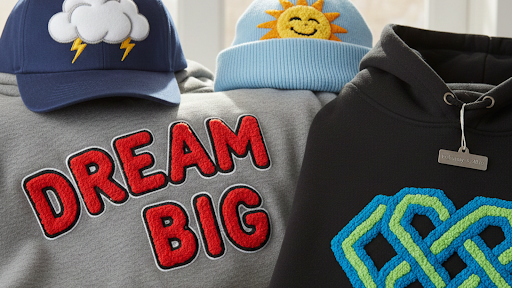
3D puff embroidery is an embroidery technique where a layer of foam is placed beneath dense satin stitches to create a raised, three-dimensional design. The result is a bold, tactile logo that stands out visually and physically.
Difference from Traditional Embroidery: Flat embroidery stitches directly onto fabric, producing a smooth, low-profile finish. In contrast, 3D puff embroidery adds height and dimension, prioritising visibility over fine detail.
Why Foam Is Used : Specialised EVA foam is used because it compresses cleanly under stitches, holds its shape over time, and can be removed without damaging the embroidery.
2. How Does 3D Puff Embroidery Work? (Step-by-Step Guide)
Step 1: Foam Placement: A piece of embroidery foam is placed directly on top of the fabric before stitching begins.
Foam thickness usually ranges from 2mm to 6mm, depending on how bold the design needs to appear.
Colour-matching the foam to the thread reduces the risk of visibility along edges.
Step 2: Satin Stitch Coverage: The embroidery machine runs dense satin stitches—often 50% higher density than flat embroidery—to fully compress and cover the foam.
Thin stitches fail because they cannot slice or trap the foam correctly.
Step 3: Foam Trimming & Heat Finishing: Excess foam is removed manually or with controlled heat.
Edge-capping stitches seal the design, preventing lifting or foam exposure over time.
3. 3D Puff Embroidery vs Flat Embroidery
| Feature | Flat Embroidery | 3D Puff Embroidery |
|---|---|---|
| Appearance | Flat & subtle | Raised & bold |
| Detail Level | Excellent | Limited |
| Cost | Lower | Higher |
| Best For | Detailed logos | Bold lettering |
| Fabric Suitability | Most fabrics | Structured fabrics |
This comparison directly answers one of the most common buyer questions and improves snippet eligibility.
4. Key Benefits of 3D Puff Embroidery
- High-impact visuals: Raised embroidery increases logo visibility from a distance
- Premium, tactile feel: Adds perceived value compared to flat stitching
- Long-term durability: When stitched correctly, puff embroidery maintains structure through repeated wear
- Brand recognition: Especially effective on caps—one of the most worn promotional items globally
Industry data consistently shows that branded headwear delivers longer brand impressions than short-lifespan printed apparel, making puff embroidery a strategic branding choice.
5. Best Uses & Applications of 3D Puff Embroidery
Headwear: Structured caps like Richardson 112 and Yupoong 6606 provide the firmness needed to support foam without collapsing.
Corporate & Promotional Apparel: Ideal for jackets, uniforms, and branded merchandise where logos need to look bold and professional.
Fashion & Streetwear: Popular on hoodies, beanies, and varsity wear to add depth and texture without overcomplicating the design.
6. When NOT to Use 3D Puff Embroidery
3D puff embroidery should be avoided when:
- Letters are under 0.2″ wide
- Designs rely on thin lines, gradients, or shading
- Fabrics are lightweight or stretchable (t-shirts, performance wear)
- Artwork includes heavy multi-colour detailing
- Budgets or turnaround times are tight
In these scenarios, flat embroidery or digital printing produces cleaner, more predictable results.
7. Design Rules You Must Follow for Puff Embroidery
To avoid production failures:
- Minimum stitch width: 0.2″–0.5″
- Use block or collegiate fonts
- Limit colours (ideally five or fewer)
- Avoid overlapping shapes
- Always digitise specifically for puff embroidery
Most puff embroidery issues come from ignoring these fundamentals.
8. Materials Used in 3D Puff Embroidery
Foam Types: EVA foam is standard, with thickness selected based on stitch width and fabric structure.
Thread Selection: Polyester thread is preferred for durability and colour retention. Rayon offers shine but slightly less strength.
Needles & Stabilizers: Larger needles help manage dense stitching. Cut-away stabilizers suit stretch fabrics, while tear-away works best for rigid materials.
9. How to Digitize Designs for 3D Puff Embroidery
Flat embroidery files do not translate well to puff. Puff digitising requires wider stitch columns, adjusted angles, and increased density. Professional digitising significantly reduces production errors and foam exposure.
10. Cost, Pricing & Production Time Guide
Typical Pricing Breakdown
- $2–$5 extra per item compared to flat embroidery
- One-time digitising fees starting around $7.50
- Bulk orders (24, 72, 144+ units) reduce per-unit costs
11. Care & Maintenance Tips for Raised Embroidery
- Wash inside out using cold water
- Avoid high-heat drying
- Store caps and hoodies to prevent pressure on raised areas
Proper care preserves puff height and stitch integrity.
When 3D Puff Embroidery Isn’t the Right Fit — Choose Flat Embroidery Instead
Choosing flat embroidery isn’t a compromise—it’s often the most professional and cost-effective decision for many brands. If your logo includes fine details, small text, or multiple colours, flat embroidery delivers cleaner edges, sharper clarity, and consistent results across all fabric types.
Flat embroidery is the better solution when:
- Your logo is detailed, text-heavy, or requires precision
- The garment is lightweight or stretchable (t-shirts, polos, performance wear)
- You need faster production timelines
- Budget control and scalability matter
Need help choosing the right embroidery method?
A professional embroidery partner will review your artwork, fabric type, and order volume before production—saving you from costly rework and disappointing results. Whether your project calls for bold 3D puff embroidery or precision flat stitching, expert guidance ensures your branding looks intentional, not experimental.
Try The Apparel Pro to make sure your embroidery choice fits your design, budget, and long-term brand goals.
Frequently Asked Questions
How does 3D puff embroidery work?
Foam is placed under dense satin stitches to create a raised, three-dimensional effect.
What foam thickness is best for 3D puff embroidery?
Most designs use foam between 2mm and 6mm, depending on stitch width.
Can 3D puff embroidery be done on hoodies?
Yes, but it works best on thicker, structured hoodies.
How much should I charge for 3D puff embroidery?
Typically $2–$5 more per item than standard flat embroidery.
What needle is best for 3D puff embroidery?
Larger needles designed for dense satin stitching perform best.
Can puff embroidery be done by hand?
No, consistent puff embroidery requires an embroidery machine.